
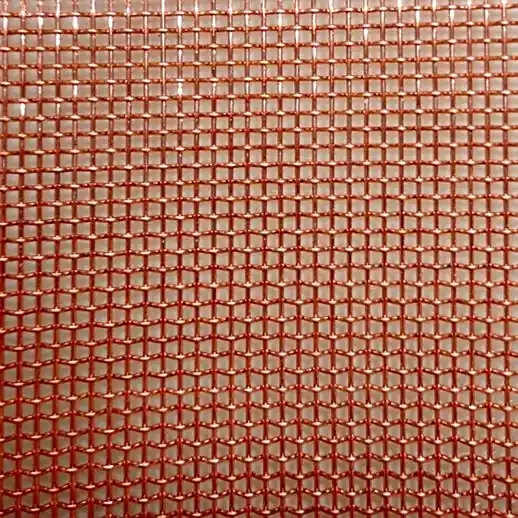
What is the working principle of a blocking network?

The working principle of the shielding net (or EMI shielding layer) is based on electromagnetic field theory, which limits electromagnetic interference (EMI) to specific areas or guides it to the ground
The working principle of the shielding net (or EMI shielding layer) is based on electromagnetic field theory. The core is to construct a continuous enclosed cavity through conductive materials, and use three mechanisms of reflection, absorption, and grounding conduction to limit electromagnetic interference (EMI) to specific areas or guide it to the ground. Its essence is to construct a 'Faraday cage'.
The following is a detailed analysis of its working principle:
1. Three core mechanisms of action
Mechanism | Principles of Physics | Analogical explanations | Reflected in the blocking network |
Reflection | The free electrons on the surface of the shielding layer (conductor) move under the action of an alternating electromagnetic field, generating a reverse electromagnetic field that reflects most of the incident waves back. | Reflecting light like a mirror. | Metal foil/conductive cloth mainly reflects high-frequency radiation interference transmitted in the air. |
Absorb | Electromagnetic waves that partially penetrate the surface layer are converted into thermal energy and consumed inside the conductive material due to eddy current and hysteresis losses | Like a sponge absorbing water flow | Ferromagnetic materials, such as nickel steel alloy shielding covers, have good absorption of low-frequency magnetic field interference. |
Grounding conduction | The shielding layer is connected to the ground (system ground) through a low impedance path, which quickly guides and discharges the captured interference current and static charge. | Like a lightning rod, it guides lightning into the earth. | Conductive foam and shrapnel connect the shielding layer to the equipment ground, which is the key to effective shielding. |
2. Shielding principles for different types of interference
Regarding electric field/high-frequency radiation interference: mainly relying on reflection. The high-frequency noise generated by the LCD screen driver chip is easily radiated, and the metal layer of the shielding mesh (such as aluminum foil) can effectively confine it inside.
Regarding low-frequency magnetic field interference: mainly relying on absorption and bypass. The low-frequency magnetic field generated by power conversion can penetrate ordinary conductors and requires the use of high permeability materials (such as specialized shielding alloy) for magnetic field line diversion and absorption.
For electrostatic discharge (ESD): completely conducted through grounding. Static charges are intercepted by the surface of the shielding layer and safely guided into the ground through a grounding path to prevent breakdown of internal precision circuits.
3. Coordination between shielding network structure and working principle
Each layer in its multi-layer composite structure corresponds to a specific working principle:
Surface layer (metal foil/conductive cloth): As a reflective surface, it is the first line of defense.
Intermediate layer (conductive foam/magnetic core material): absorbs the interference that has penetrated and ensures continuity of conductivity with the next layer.
Grounding layer (shrapnel/connection point): Achieving final conductive discharge is the key to closed-loop shielding effectiveness.
Key points affecting shielding effectiveness
Continuity: The shielding body must be electrically continuous, and any gap or hole will become a leaking antenna. The cable outlet is a key design focus.
Grounding quality: The grounding impedance must be extremely low. Virtual connections and long connections can significantly reduce or even render shielding effectiveness ineffective.
Material selection: Different materials are required for interference at different frequencies. For example, copper (with good conductivity) is suitable for high frequencies, and iron nickel alloy (with high permeability) is suitable for low frequency magnetic fields.
Maintenance perspective: Why can't the shielding net be omitted
During maintenance, if the shielding mesh is damaged or omitted, it may result in:
The screen itself is abnormal: water ripples, shaking, noise, etc. appear.
Interference with other components: affecting Wi Fi, Bluetooth, and cellular antenna signals, resulting in decreased wireless performance of the device.
Equipment EMC test failed: unable to pass necessary certifications (such as CE, FCC).
Increased risk of electrostatic damage: Internal circuits are more susceptible to electrostatic breakdown.
In summary, the working principle of a shielding net is a system engineering that integrates electromagnetic reflection, absorption, and grounding conduction. It is not simply a "piece of metal", but a carefully designed "electromagnetic protective cover" for high-speed circuits of LCD screens.
If you are interested in the specific correlation between a particular fault phenomenon (such as some kind of ripple interference) and shielding failure, I can provide a more in-depth analysis.
AUO LCD:https://www.idtdisplay.com/products/AUO_LCD_Displays/