Enhanced touch technology: A dual breakthrough in performance and customization

As industries increasingly adopt touch-based technologies, the demand for superior touch performance and functionality has skyrocketed Today’s cutting-edge solutions offer not only compatibility across devices
Enhanced Touch Functions & Performance: Pioneering Innovations in Industrial Design
As industries increasingly adopt touch-based technologies, the demand for superior touch performance and functionality has skyrocketed. Today’s cutting-edge solutions offer not only compatibility across devices but also the flexibility to cater to specific industrial needs. This is where the combination of high compatibility and customized cover lenses comes into play, offering innovations that elevate user experience and ensure reliability across various use cases.
High Compatibility: Meeting Rigorous Standards
The high compatibility of modern touch systems ensures that the technology can function flawlessly under diverse conditions. Key features that ensure optimal performance include:
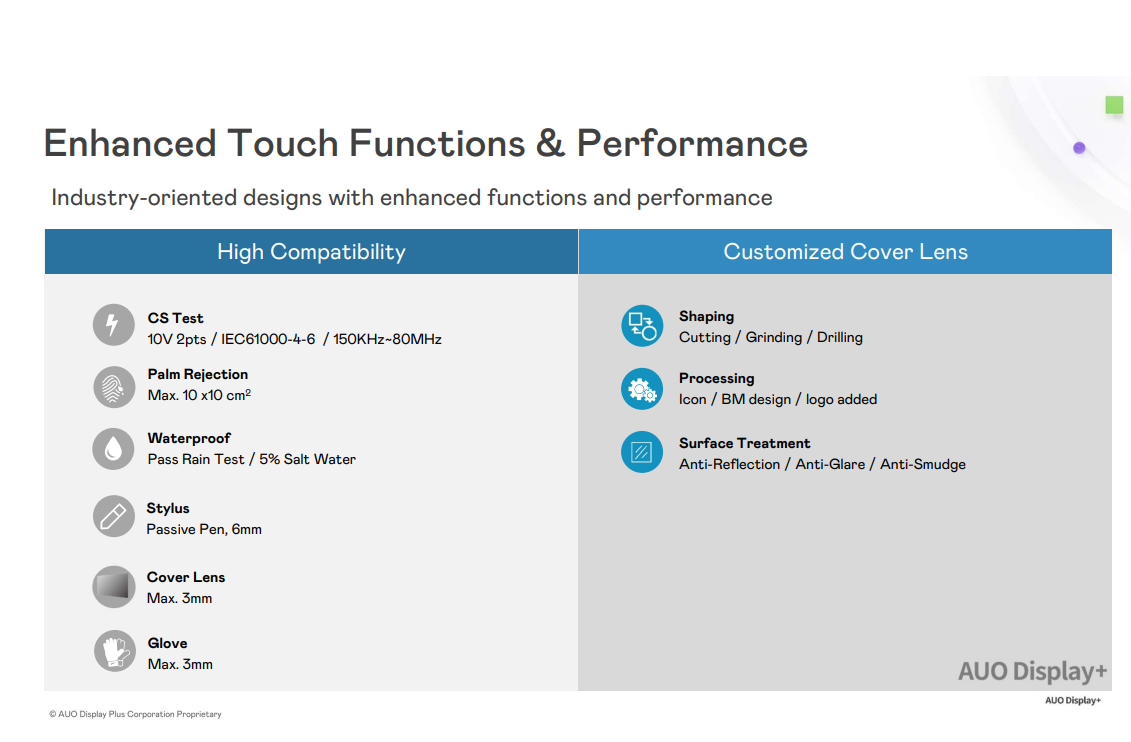
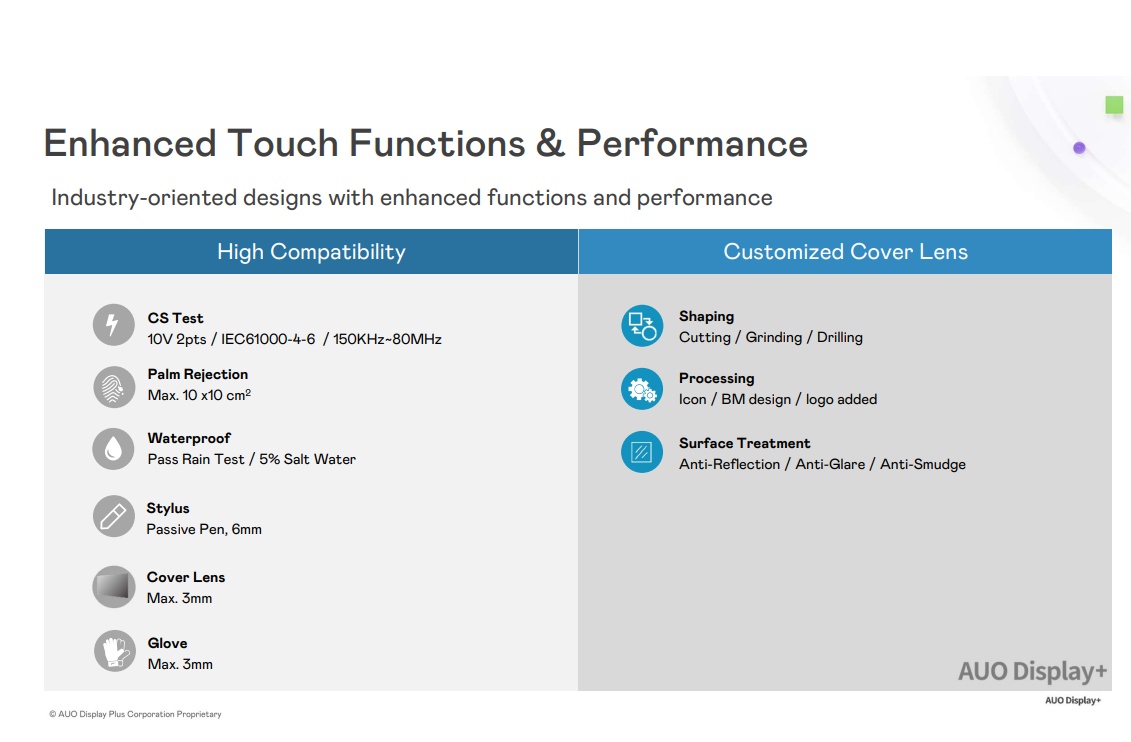
CS Test: A critical test of touch functionality under various electrical conditions, the CS test verifies the technology’s robustness, with standards such as 10V 2pts and IEC61000-4-6 compliance (spanning 150 KHz to 80 MHz).
Palm Rejection: This function enhances the user experience by limiting accidental inputs, enabling users to rest their palms on the screen comfortably. Palm rejection sensitivity is optimized to handle areas up to 10 x 10 cm², offering reliability and ease of use.
Waterproofing: The touchscreens are tested against rain and saltwater to meet the stringent standards of industries where exposure to moisture is frequent. These tests ensure that the devices maintain functionality in wet environments, with 5% saltwater resistance ensuring durability in harsh conditions.
Stylus and Glove Compatibility: With options to use a passive pen (6mm) and gloves (up to 3mm thick), the system adapts to both professional and industrial settings, ensuring that the technology is usable in a wide variety of environments.
Customized Cover Lenses: Tailoring Solutions for Specific Needs
While the high compatibility features provide a solid foundation for general functionality, the customizable cover lens aspect is what makes this technology adaptable to various industries. By tailoring cover lens solutions, manufacturers can enhance both the aesthetic and functional quality of touch interfaces. Here are some of the key elements of customized cover lenses:
Shaping: The customization process includes cutting, grinding, and drilling the cover lens to fit the specific design and usage needs of various devices. These processes are crucial for industries where specialized form factors are required for touch interfaces, such as automotive displays or industrial machinery.
Processing: Manufacturers can apply additional features such as icons, branding, or logos on the cover lens, allowing the device to align with the aesthetic or branding guidelines of the company. This process adds a layer of personalization while maintaining the integrity of the touchscreen’s functionality.
Surface Treatments: For enhanced performance and durability, the surface of the cover lens can undergo treatments like anti-reflection, anti-glare, and anti-smudge coatings. These treatments not only improve the visual clarity of the display under various lighting conditions but also reduce the accumulation of fingerprints and smudges, making the touchscreen more user-friendly and maintaining its pristine condition.
The Future of Industrial Touch Technology
As industries continue to evolve, the role of touch technology will only grow, with ever-increasing demands for enhanced functionality, durability, and customization. Whether in healthcare, automotive, or consumer electronics, the integration of high compatibility standards with customized cover lens solutions represents the cutting edge of modern industrial design.
By offering solutions that combine ease of use, robust performance under extreme conditions, and the flexibility to cater to unique design needs, these technologies are poised to shape the future of interactive systems across multiple industries.
TFT LCD:https://www.idtdisplay.com/products/industrial_touch_screen/
TOUCH SCREEN:https://www.idtdisplay.com/products/industrial_touch_screen/