What are the common resolutions for a 4.3-inch LCD screen?

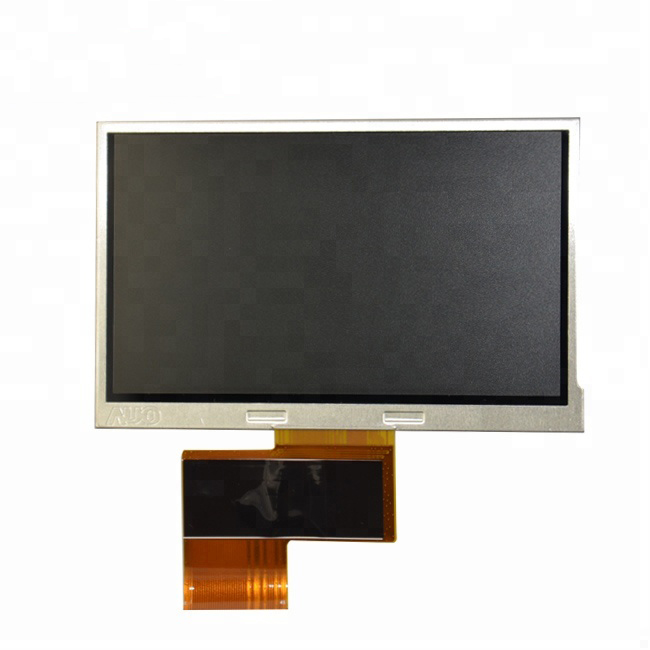
Regarding the 4 3-inch LCD screen, there are currently two main resolutions that are most commonly seen and widely available in the market The most mainstream and widely used resolutions are 480×272 (WVGA) and 800×480 (WVGA)
For 4.3-inch LCD screens, there are currently two main resolutions that are most commonly seen on the market and widely available in stock. The following table summarizes their core comparisons:
Resolution | Aspect ratio | Market positioning | Key Features | Common application scenarios |
480 × 272 | 16:9 | standard resolution | Mature technology, low cost, low power consumption, and simple driving | Industrial control, portable devices (navigation systems, MP4 players), instruments and meters |
800 × 480 | about16:9 (5:3) | high resolution | It displays with greater clarity and fineness, often paired with wide viewing angle technologies like IPS | High-end industrial equipment, equipment requiring display of fine graphical interfaces |
Resolution Explanation and Selection Reference
1.480×272 (WVGA)
This is the most mainstream and widely used resolution among 4.3-inch screens. A large number of brands such as Innolux, Sharp, Samsung, and numerous module manufacturers offer products of this specification. It has become the preferred choice for many projects due to its mature technical solutions and high cost-effectiveness.
2.800×480 (WVGA)
This is the high-definition option for this size, which can significantly improve the picture precision. For example, Sharp's LQ043Y1LX01 is an industrial screen that uses this resolution. Choosing this resolution usually means higher requirements for display quality.
Note: Some sources mention the existence of other resolutions such as 854 × 480 and 960 × 540. But in actual supply, these two are far less popular than the above two and require specialized channels for sourcing or customization.
How to choose?
When making a choice, the following points can be given priority consideration:
The primary consideration is cost and supply: If the project does not require high display precision, but focuses on cost control and development convenience, 480 × 272 is the most reliable choice, and its solution and supply chain are very mature.
Pursuing better display performance: If used in situations where complex interfaces, charts, or text need to be displayed, 800 × 480 can bring a better user experience.
Be sure to confirm the specific model: screens with different resolutions have different driver ICs, interfaces (such as RGB, LVDS), and pin definitions, which cannot be directly replaced. After determining the resolution, specific models need to be screened based on working temperature range, brightness, interface type, and whether touch is required.
If you could tell me the specific purpose of this screen (such as for industrial controllers, portable medical devices, or other products), I can provide you with more targeted selection recommendations.
Innolux 4.3-inch LCD screen:https://www.idtdisplay.com/products/innolux-lcd/4-3inch/
AUO 4.3-inch LCD screen:https://www.idtdisplay.com/products/AUO_LCD_Displays/4-3inch/