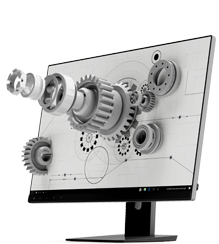
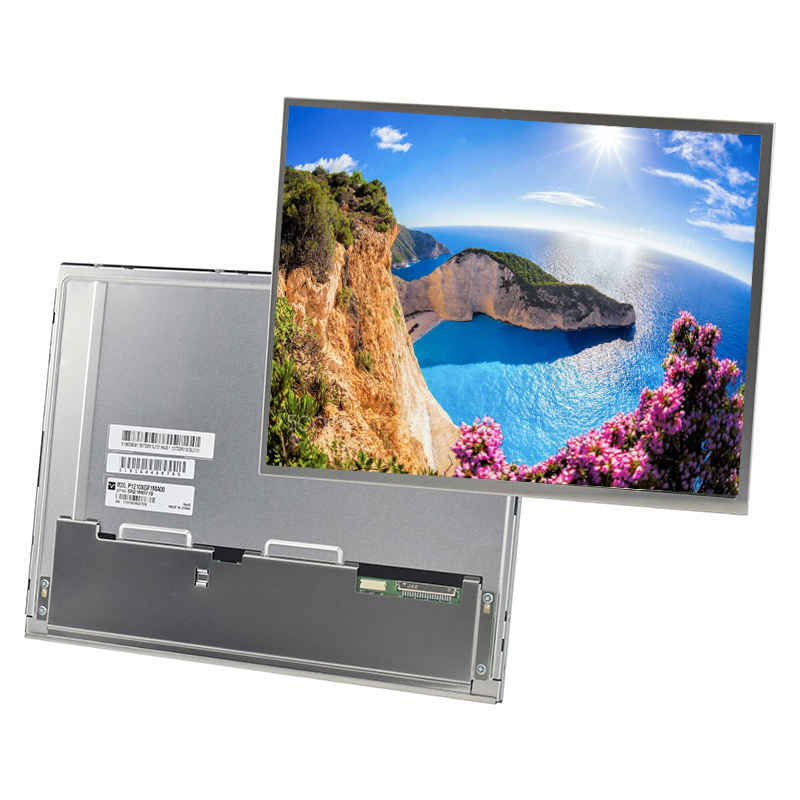
What is a side entry light source for LCD screens?

Side entry light source, as the name suggests, refers to placing light-emitting components (usually LED light strips) on the side edges of a liquid crystal panel, and then using a precise optical guidance system to convert the linear light emitted
The technical concept of how a liquid crystal display (LCD) is illuminated. Due to the fact that liquid crystals do not emit light themselves, they must rely on an independent light source to provide backlight for us to see the image. Side entry is one of the mainstream backlight solutions. Let's explain in detail the "side entry light source" of LCD screens.
core definition
Side entry light source, as the name suggests, refers to placing light-emitting components (usually LED light strips) on the side edges of a liquid crystal panel, and then using a precise optical guidance system to convert the linear light emitted from the side edges into uniform surface light that illuminates the entire screen.
Its core design philosophy is to use fewer lights to illuminate a larger area through "borrowing light" and "guiding light", thereby achieving the ultimate slimness of the device.
Key components
A complete side entry backlight system typically includes the following parts:
LED light strip: located on one side (most commonly at the bottom), two sides, or four sides of the screen. There are dense white LED chips arranged on top.
Light guide plate: This is the soul component of side entry technology. It is a transparent sheet made of optical grade acrylic or PC that covers the entire screen size.
Function: Receive light entering from the side, utilize precision dots (microstructures) at the bottom or inside of the board, break the total reflection condition of light, and scatter the light evenly from the front of the board.
Principle analogy: It's like placing a glowing fluorescent tube on the side of a transparent ice cube. After the light enters the ice cube, through the carved marks inside, the entire ice cube lights up evenly.
Reflective film: attached to the bottom of the light guide plate to reflect the downward leaking light back and improve light utilization efficiency.
Diffusion film: located above the light guide plate, used to further scatter light, eliminate dots or hotspots, and make the light distribution softer and more uniform.
Prism film (brightening film): usually has one to two layers, its function is to concentrate large angle scattered light into the viewing angle range directly in front of the screen, thereby significantly improving the brightness and contrast of the front side.
Comparison with another main technology (direct type)
The best way to understand the side entry type is to compare it with its "opponent" - the direct light source.
Feature | Side entry light source | Direct light source |
LED position | Located on the side of the screen | Located directly behind the screen, evenly arranged behind the entire panel |
Thickness | Extremely slim. Because there is no need to leave a deep space for LED lights behind. | Relatively thick. Space needs to be left for LED lights and heat dissipation. |
Uniformity of light | Relying on the light guide plate, the edges may be slightly brighter than the center (halo effect), posing a challenge to uniformity control. | Direct sunlight usually results in better uniformity, especially for mid to high end products. |
Local dimming | Difficult to achieve precise local dimming. Usually, only rough control of the edge area can be performed. | It can achieve fine local dimming (such as Mini LED technology). Divide the backlight into hundreds or even thousands of independent control areas to achieve extremely high contrast and pure black effect. |
Leakage control | Poor, the screen edge is prone to "white light" or "halo" in black images. | Better, especially when combined with multi zone local dimming, it can significantly reduce light leakage. |
Cost and power consumption | The use of fewer LEDs results in relatively lower costs and lower power consumption. | Using a large number of LEDs usually results in higher costs and power consumption. |
Main applications | Ultra thin televisions, monitors, laptops, tablets, mobile phones, and other devices that have extreme thickness requirements. | Mid to high end TVs and professional monitors prioritize image quality (high contrast, HDR effect) over thickness. |
Summary of Advantages and Disadvantages
Advantages:
Extremely slim: This is its biggest advantage, laying the foundation for modern ultra-thin electronic devices.
Low cost: fewer LEDs are used.
Light weight, low power consumption: simple structure, relatively high energy efficiency.
Disadvantages:
Relatively low contrast: unable to achieve precise local lighting control, and the black color is not pure enough.
There may be uniformity issues: the edges of the screen (near the LED side) may be brighter than the center.
Leakage phenomenon: It is more obvious when displaying dark field images.
Unable to achieve top-level HDR effect: due to the lack of precise partition control over brightness.
Development trend
Traditional side entry technology is merging with new technologies:
Side entry+Mini LED: Replace the ordinary LED on the side with smaller and denser Mini LED beads, and combine more segmented local dimming technology to significantly improve image contrast and HDR performance while maintaining relative thinness. This is an important development direction for high-end television at present.
Simply put
You can imagine a side in light source as:
In a dark room (LCD panel), stick the light strip on top of the wall, and then use a specially designed ceiling (light guide plate system) to evenly reflect the light throughout the room
Its core value is to exchange clever optical design for the stunning lightweight appearance of electronic devices, which are widely used in our daily computers, televisions, and mobile phones. But in the pursuit of ultimate picture quality, especially in scenes with high contrast and HDR effects, direct (especially Mini LED direct) technology currently has more advantages.